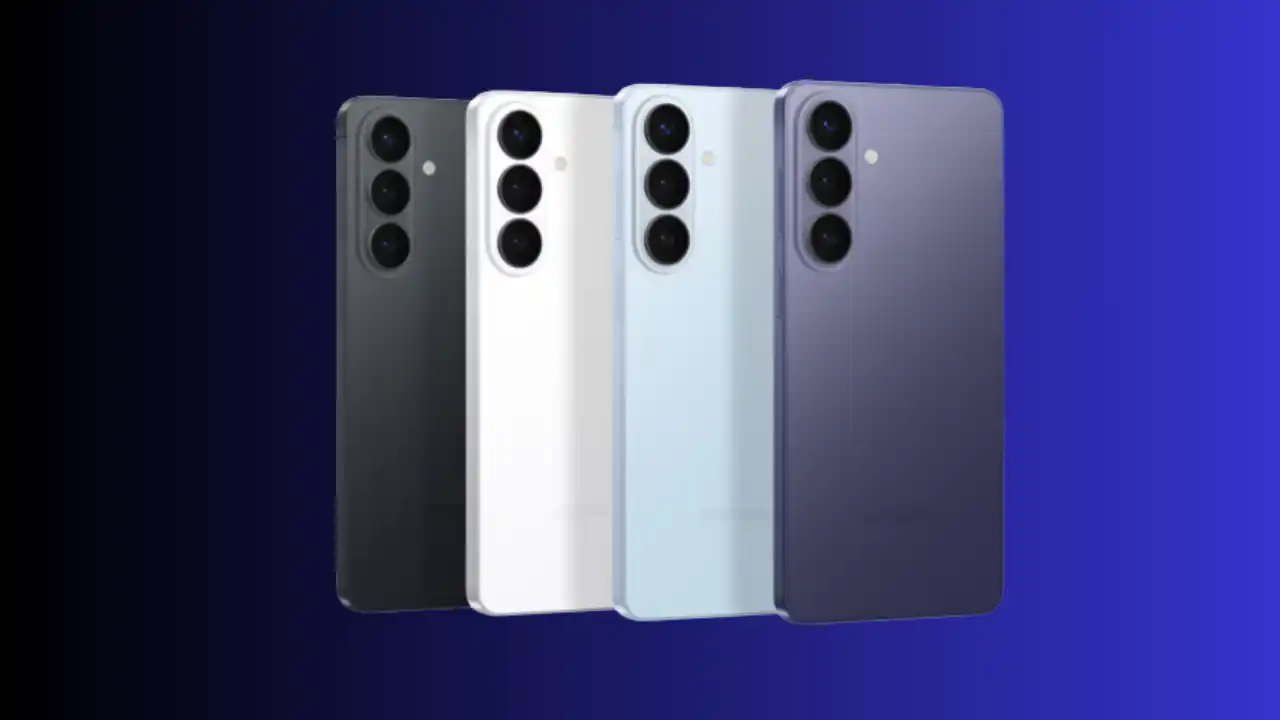
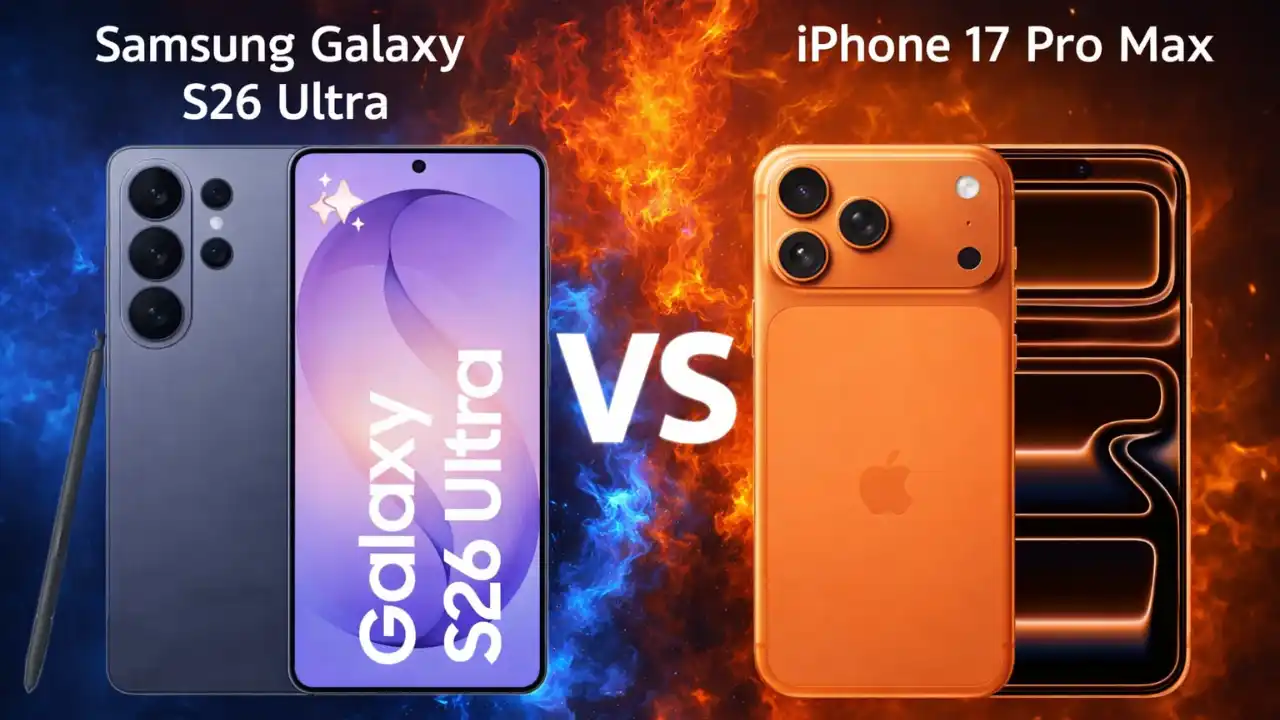
The Galaxy S26 Ultra just landed — and it’s not playing catch-up anymore. Samsung has built a phone that doesn’t just compete with the iPhone 17 Pro Max, it goes after it with surgical precision. Thinner body. Sharper screen. A privacy feature nobody saw coming. And yes, that S-Pen is still here, still making iPhone users quietly jealous.
Apple, meanwhile, brought its heaviest Pro Max yet — literally — and dressed it in a gorgeous new iOS 26 design that looks like the future. The A19 Pro chip inside is still a monster. And for millions of people locked into the Apple world, nothing else really matters.
So here’s the real question: in 2026, do you stay loyal — or do you finally make the switch?
We broke down every detail so you don’t have to guess. By the end of this, you’ll know exactly which phone deserves your money.
Samsung Galaxy S26 Ultra vs iPhone 17 Pro Max Quick Highlights
- Samsung Galaxy S26 Ultra features a built-in Privacy Display, 200MP main camera, and built-in S-Pen
- iPhone 17 Pro Max runs Apple’s A19 Pro chip, widely considered the most powerful mobile processor available
- The S26 Ultra is notably lighter (214g vs 233g) and thinner (7.9mm vs 8.8mm)
- Both phones sport massive 6.9-inch displays, but Samsung edges ahead in resolution
- Samsung’s 60W wired charging outpaces Apple’s 40W offering
Samsung Goes Bold With the S26 Ultra
Samsung has never been shy about pushing boundaries, but the Galaxy S26 Ultra feels like a genuine statement. Powered by the Snapdragon 8 Elite Gen 5 and packed with up to 16GB of RAM, it’s built to handle anything you throw at it — from 8K video editing to hours of mobile gaming.
What really sets it apart this cycle isn’t just raw horsepower. It’s the decisions Samsung made around design and everyday usability. The phone is slimmer, lighter, and — surprisingly — smarter about privacy than anything Apple currently offers.
The Privacy Display Is a Bigger Deal Than It Sounds
One of the most talked-about features of the S26 Ultra is its Privacy Display. At the tap of a button, the screen narrows its viewing angles so that only the person holding the phone can see what’s on it. Everyone else sees a dark, unreadable blur.
This might sound like a minor addition, but think about how often you check your banking app, read private messages, or scroll through work emails in public spaces. It’s a feature that solves a real, everyday problem — and Apple has no equivalent in 2026. That alone could sway privacy-conscious buyers.
Display Quality: Samsung Pulls Ahead on Paper
Both phones carry identical 6.9-inch screens, but the S26 Ultra’s 3120 x 1440 QHD+ resolution at 500 pixels per inch edges past the iPhone 17 Pro Max’s 460 ppi panel. The difference may not be dramatic in casual use, but for anyone consuming high-resolution content or doing detailed creative work, Samsung’s display is the sharper of the two.
The Dynamic AMOLED 2x panel also delivers the kind of color vibrancy and contrast that Samsung has refined over years of display engineering. It’s still one of the best screens on any device, period.
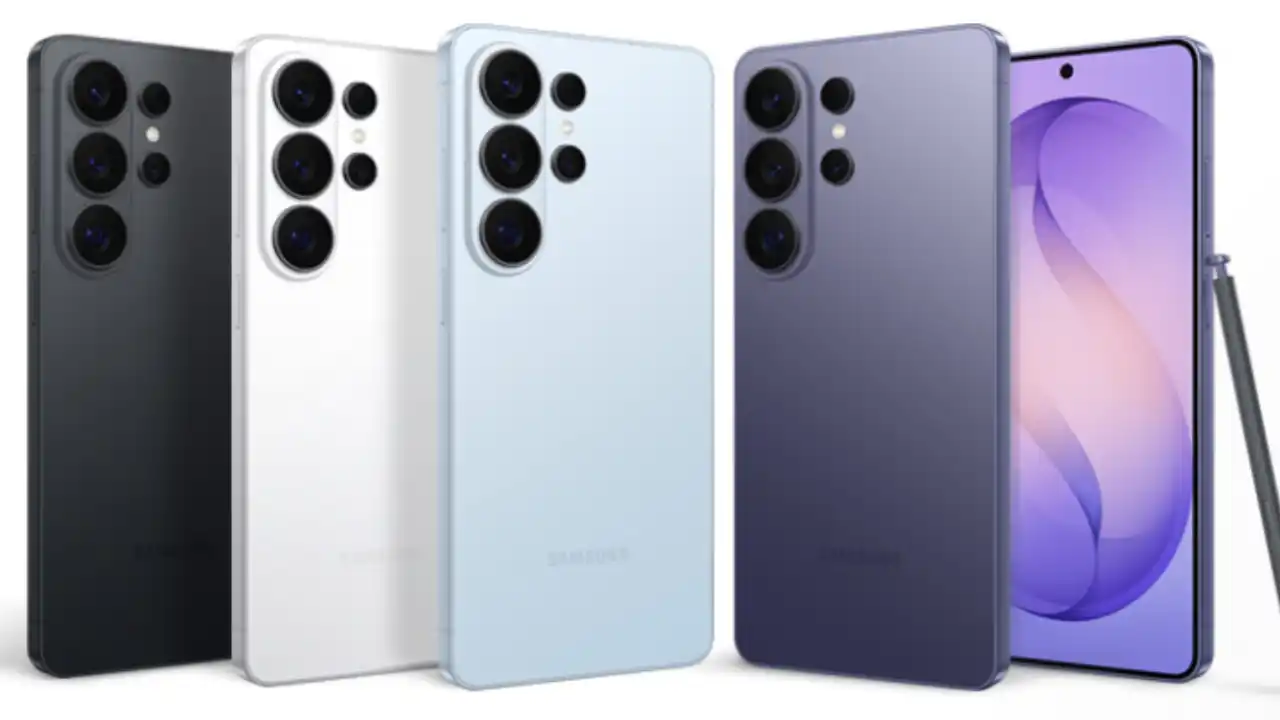
The S-Pen: Still Samsung’s Secret Weapon
Apple fans have long had the Apple Pencil, but it doesn’t live inside the phone. Samsung’s built-in S-Pen remains one of the most underrated productivity tools in mobile tech.
Whether you’re jotting quick notes, sketching, signing a document, or using the pen as a remote camera shutter — it’s all right there, no accessory required. For professionals who use their phone as a genuine work tool, this is a meaningful differentiator.
Apple Fights Back With the A19 Pro and iOS 26
The iPhone 17 Pro Max isn’t going down without a fight. Apple’s A19 Pro chip continues to lead the industry in sustained performance benchmarks, handling intensive workloads with remarkable efficiency. For tasks like video rendering, machine learning, and gaming, the A19 Pro is still arguably the best mobile chip available.
iOS 26 also introduces a polished new “Liquid Glass” design language that looks stunning and feels fresh. And for users already embedded in the Apple ecosystem — with a Mac, iPad, AirPods, and Apple Watch — the seamless continuity features remain unmatched.
Apple did make one puzzling decision: reverting to an aluminum frame added weight. At 233g, the iPhone 17 Pro Max feels noticeably heavier than its predecessor and considerably heavier than the S26 Ultra.
From Our Perspective
Samsung has clearly studied its competition carefully this year. The S26 Ultra doesn’t just match the iPhone 17 Pro Max — it targets the specific areas where Apple has historically been untouchable, like display quality and design refinement. The Privacy Display, in particular, feels ahead of its time.
That said, Apple’s software ecosystem and chip performance keep the iPhone firmly in the conversation. This isn’t a knockout — it’s a close match decided by what matters most to you.
The Bottom Line
The Galaxy S26 Ultra is Samsung’s strongest flagship in years, offering a lighter design, a sharper display, a genuinely useful privacy feature, and the ever-reliable S-Pen. For Android users — and even some considering a switch — it’s a very compelling package.
The iPhone 17 Pro Max remains the gold standard for Apple loyalists and those who prioritize chip performance and software polish. Neither phone is a wrong choice. But in 2026, Samsung has given buyers more reasons than ever to take a long, hard look before defaulting to Apple.