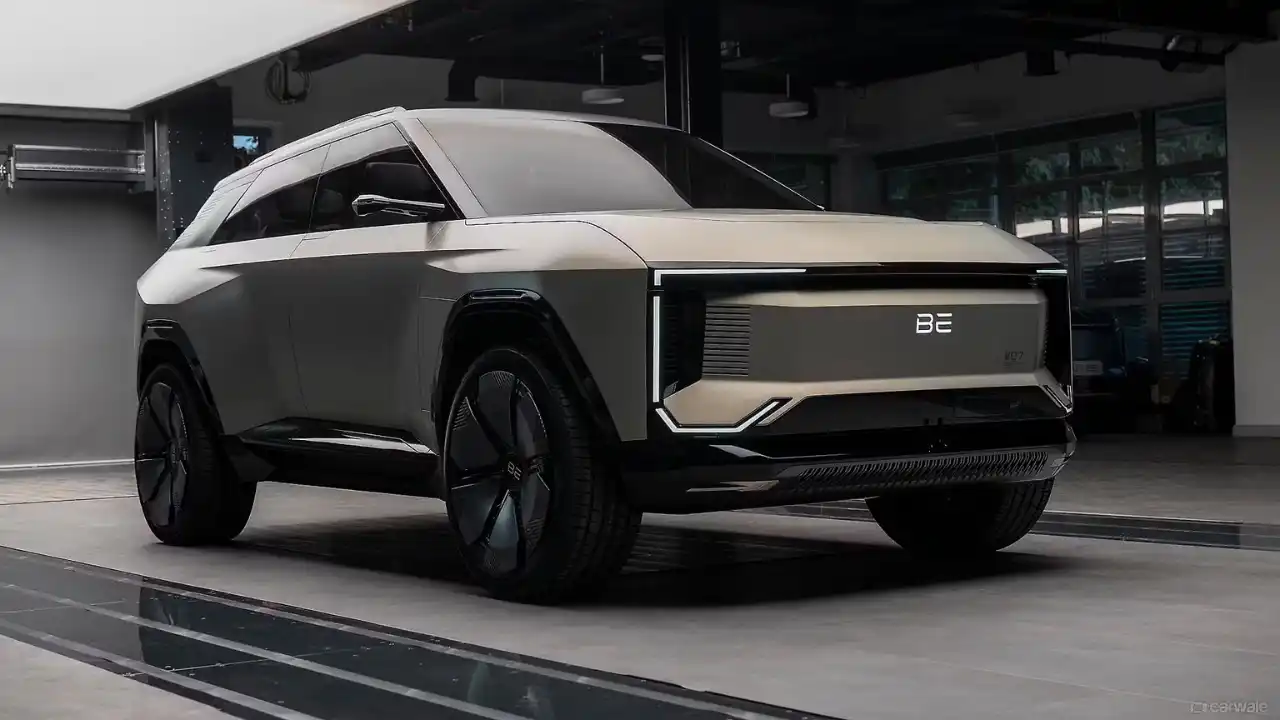
Mahindra is ramping up its electric vehicle game, and the latest confirmation from the company points to a major mid-size electric SUV hitting Indian roads in 2027. This model, internally codenamed B07 and based on the striking BE.07 concept unveiled back in August 2022, was originally eyed for a late 2026 debut but has now been pushed to the following year.
As India’s EV market heats up with more options and better charging support, this new entrant could become a strong contender in the popular family SUV segment. Mahindra executives have called it a potential “big volume driver,” signaling high expectations for its role in expanding the brand’s Born Electric lineup.
Mahindra Upcoming Electric SUV Quick Highlights
- Expected Launch: Calendar year 2027 (delayed from October 2026)
- Battery Options: Likely 59-60 kWh and 79-80 kWh packs
- Power: Around 228 bhp to 282 bhp with 380 Nm torque
- Range: Over 550 km (smaller battery) to over 650 km (larger battery), real-world estimates
- Key Features: Futuristic design, massive dashboard screen, minimal physical buttons, panoramic sunroof
- Rivals: Tata Harrier EV, VinFast VF7, and other mid-size electric SUVs
Mahindra Confirms 2027 Launch for BE.07-Based Electric SUV
Mahindra recently shared the update during its quarterly earnings call, where Executive Director Rajesh Jejurikar highlighted the B07 (production name TBD) as the next big step after models like the BE 6, XEV 9e, and XEV 9S. The slight delay allows more time for refinements on the dedicated INGLO platform, which is already proving reliable in current EVs. This skateboard-style architecture offers flexibility in battery sizing, strong safety standards, and efficient packaging for better interior space.
The production version will follow the BE.07 concept closely, focusing on a practical five-seater SUV shape rather than the sportier coupe style of siblings like the BE 06. Expect it to sit above the BE 6 in the lineup, targeting buyers who want more traditional SUV proportions with modern electric tech.

Design, Features, and Specifications: What to Expect
The BE.07 concept measured about 4,565 mm long, 1,900 mm wide, and 1,660 mm tall, with a generous 2,775 mm wheelbase—similar to many popular mid-size SUVs today. The production model should keep the sharp C-shaped LED headlamps and taillamps, flush door handles for a clean look, and bold wheel arches that give it a muscular stance.
Inside, the cabin promises a high-tech feel with a sweeping dashboard screen, a large panoramic sunroof for an airy vibe, and a flat-bottom steering wheel. Physical buttons will be kept to a minimum, with most controls shifting to touch interfaces and haptic feedback—great for a clean, premium look but something buyers should test for everyday ease.
Powertrain details remain under wraps officially, but it will share components with the BE 06 family. That means two battery choices: a smaller one (around 59-60 kWh) for everyday use and a larger 79-80 kWh pack for longer trips. Both pair with a Permanent Magnet Synchronous Motor, offering 228 bhp or 282 bhp and a healthy 380 Nm torque. Driving modes like Range, Everyday, Race, Snow, and Custom should carry over, helping adapt to Indian road conditions from city traffic to occasional highways or wet weather.
Range looks promising, with over 550 km possible on the smaller pack and pushing beyond 650 km on the bigger one (likely ARAI figures; real-world could be 10-20% lower depending on usage). DC fast charging up to 180 kW means quick top-ups, potentially 5-80% in around 30 minutes—handy as India’s charging network grows.
Price Expectations and Competition Ahead
While Mahindra hasn’t shared official pricing yet, industry estimates place this electric SUV in the ₹25-35 lakh range (ex-showroom), depending on battery and features. That positions it competitively against the upcoming Tata Harrier EV (expected around similar pricing with strong brand loyalty) and the VinFast VF7 (already making waves with aggressive offers and premium feel).
The Harrier EV brings Tata’s proven EV tech and vast service network, while the VF7 undercuts on price in some trims but faces questions on long-term reliability and after-sales in India. Mahindra’s edge could come from its established trust, widespread dealerships, and focus on practical family use—think better ground clearance for bad roads and spacious interiors.
From a buyer’s perspective, this Mahindra could strike a nice balance between futuristic appeal and real-world usability, especially if charging infra improves by 2027 and battery costs drop further.
Why This Matters for Indian EV Buyers
As electric adoption grows, models like this BE.07-based SUV address key concerns: decent range for inter-city drives, fast charging for convenience, and enough space for families without compromising on style. The delay to 2027 might frustrate eager buyers, but it also means Mahindra can fine-tune the product amid evolving regulations and tech.
Overall, this Mahindra Upcoming Electric SUV looks set to strengthen Mahindra’s position in a crowded but exciting segment. Keep an eye out for more official reveals closer to launch—updates on the final name, exact specs, and pricing could make it one to watch for anyone planning their next family EV.